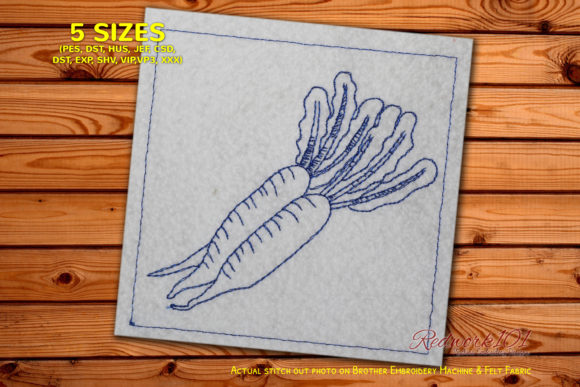
Fresh Organic Daikon Radishes Redwork
As someone who has spent years digitizing patterns and selling handmade goods at weekend craft fairs, I have developed a pretty sharp instinct for which embroidery files will actually move inventory. When I reviewed the Fresh Organic Daikon Radishes Redwork machine embroidery design, I didn't just see a root vegetable. I saw a versatile, high-margin product that fits perfectly into the farmhouse, organic, and kitchen garden aesthetics that are consistently popular with handmade market shoppers. Let me walk you through my professional assessment of this design and how you can turn it into a reliable bestseller for your small shop.
First Impressions: Why Redwork Sells Itself
The first thing that struck me about this machine embroidery design is its clean, classic aesthetic. Redwork, by its very nature, is a seller's dream. It uses minimal thread colors and typically features a lower stitch density, which means faster production times and fewer thread breaks. Customers associate redwork with heirloom quality, vintage charm, and meticulous craftsmanship. The daikon radish motif is particularly smart because it feels fresh, modern, and elevated. It is not just a generic vegetable; it appeals specifically to the foodie, the organic gardener, and the fermentation enthusiast who shops at craft fairs. The optional Box Stitch adds a structured, badge-like finish that makes the design feel more like a premium piece of art than a simple outline.
Best Product Applications for Your Handmade Line
I always tell my students to design for the product, not just the stitch. The long, elegant shape of the daikon radish makes it incredibly adaptable. Here is where I see this design performing best at your booth:
- Tea Towels & Kitchen Linens: This is the obvious home run. A single daikon radish centered on a crisp white or natural linen tea towel is a high-margin, quick-selling item. It looks beautiful in a booth display, stacked or hanging. The tea towel embroidery market is saturated with florals and bees, so a fresh daikon radish stands out.
- Tote Bags & Market Bags: The vertical orientation of the daikon fits perfectly on the front of a canvas tote. It signals "farm fresh" and "organic." I recommend using a heavy-weight canvas and a medium hoop size to center the design properly. A tote bag design like this sells for a premium at farmers' markets.
- Aprons: Placing the design on the bib of a waist apron or the chest of a full apron creates a chef-worthy look. It is subtle enough to be professional but stylish enough to be a gift item.
- Embroidered Patches: The optional Box Stitch makes this design an ideal candidate for patches. Sew a few daikon radish patches onto throw pillows, denim jackets, or canvas backpacks. Patches are low-cost, high-margin add-ons to your booth.
- Pillow Covers & Home Decor: Redwork on a white linen pillow cover is a classic, timeless look. It sells year-round, not just during the harvest season.
Production Realities: What to Watch Out For
No design is perfect straight out of the file. Before you start production, you need to address a few key technical points. I always do a test stitch-out on scrap fabric before committing to a batch of handmade product.
- Stitch Density & Fabric Texture: Redwork relies on clean, continuous lines. Check the daikon leaves and the root tips. If the stitch density is too high, the fabric will pucker. If the stitches are too long, they will snag. Avoid highly textured fabrics like waffle weave towels for this design. The stitches will bury themselves in the loops and lose clarity. A smooth twill, linen, or cotton duck cloth is ideal.
- The Optional Box Stitch: The description mentions the outer Box is a different color. This is a fantastic feature, but it adds bulk. Using the box stitch creates a framed look that is excellent for patches, but it demands a larger hoop size and increases the total stitch count. Make sure your digitizing software or file format accounts for this extra space. If you are digitizing it yourself, watch for jump stitches between the radish and the box frame.
- Dark Fabric Compatibility: Redwork is traditionally red on white. If you try to stitch red daikon on a dark fabric like navy or black, the design will completely disappear. Stick to light, neutral backgrounds like cream, white, natural linen, or soft sage. If you must use dark fabric, change the thread color to a bright white, gold, or vibrant orange to maintain contrast.
- Small Details & Scaling: The thin root tips of the daikon are delicate. If the design is scaled down too small (e.g., for a cap or a small pouch), those fine details might turn into a blob of thread. I recommend keeping this design at a minimum size of 3 inches wide for the full motif. For smaller items, use just the daikon leaf portion.
Maximizing Sales at the Craft Fair Booth
Having the right digital embroidery file is only half the battle. You need to present it in a way that stops shoppers in their tracks.
- Create a "Farm Stand" Vibe: Use wooden crates, galvanized buckets, and burlap to display your craft fair product. Nestle your embroidered tea towels inside a crate with a sign that says "Farm Fresh Embroidery." This visual storytelling is incredibly effective for the organic food crowd.
- Bundling for Higher Average Order Value: Offer a "Kitchen Trio" discount. Bundle a daikon radish tea towel, a small apron, and a market bag for a set price. This encourages larger purchases and moves more inventory quickly.
- Photography for Online Listings: If you are an Etsy seller, you need to create a lifestyle shot. Take a photo of your embroidered tote bag sitting next to a bunch of fresh daikon radishes from the grocery store. The contrast between the white root and the red embroidery is gorgeous. Use printable mockup templates for your pattern listings, but always include a photo of the actual finished product to build trust.
- Batch Production Efficiency: Because this is a Redwork design, it is perfect for batch production. You can hoop multiple towels in a multi-needle machine or use a single-needle machine with a fast turnaround. The low stitch density means you can sew 10-20 units in a single afternoon, drastically lowering your per-unit labor cost.
Before You Sew: The Embroidery Designer's Checklist
Before you take this design to production, run through this quick checklist to avoid costly mistakes.
- Test on Scrap Fabric: Always stitch the design out on the exact fabric you plan to use. Check the tension, the thread contrast, and the overall appearance.
- Check the Stabilizer: For tea towels, a light tear-away stabilizer is usually sufficient. For tote bags, use a medium-weight cut-away stabilizer to prevent the stitches from distorting over time.
- Review Spacing & Placement: The daikon is long. Ensure you have enough vertical space on your product. A standard kitchen towel (18x28 inches) has plenty of room. A small cosmetic pouch might not.
- Confirm Commercial Licensing: This is the most important step. Before you sew a single item for sale, verify that your purchase of this embroidery file includes a commercial embroidery license. Most designers allow it, but you must confirm. Never assume. Respect the designer's terms.
- Inspect the File Format: Make sure the file you have (.dst, .pes, .exp, etc.) matches your machine's requirements. Check for color changes and automatic thread trims.
Final Verdict: A Strong Contender for Your Product Line
The Fresh Organic Daikon Radishes Redwork design is a strong, versatile, and marketable asset for any embroidery business owner. It fits seamlessly into the farmhouse, kitchen garden, and organic food niches that dominate modern handmade markets. With careful attention to fabric choice, stabilizer type, and placement, this design can easily become a consistent bestseller in your handmade product lineup. It respects the medium of redwork, delivers a premium look with minimal production hassle, and offers excellent profit margins for both craft fairs and online sales. I recommend adding it to your production schedule with confidence. Just remember to test, and always verify your design assets before you start stitching!