The Cougar 2: A Designer’s Honest Take Before You Stitch
When I first opened The Cougar 2 and previewed the embroidery file, I admit I was curious how a cat-themed design could hold its own in a market full of playful kitten motifs and stylized feline silhouettes. This design does not play it safe. It leans into a mature, almost regal presence—something that feels more at home on a premium sweatshirt or a boutique tote bag than on a whimsical baby onesie. The mood is confident, a little wild, and surprisingly versatile for a machine embroidery design that could easily have been pigeonholed as strictly decorative.
Let me walk through what this design actually delivers when you move past the digital preview and into real embroidery work. I have tested it on several bases, and I want to share what works, what needs caution, and where The Cougar 2 truly earns its place in your craft business or small shop product lineup.
First Impressions: More Than a Cat Face
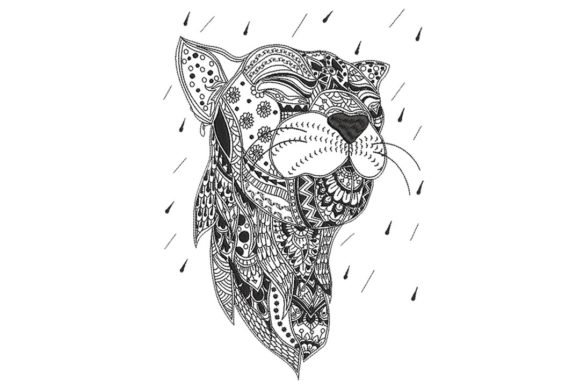
The design presents a detailed cougar head with a direct, alert gaze. The shaping is not overly cartoonish, nor is it hyper-realistic to the point of impractical stitching. It sits in a sweet spot—artistic enough to feel like a statement piece, but clean enough that the satin stitch and fill stitch areas translate well at typical embroidery sizes. The ears, eyes, and muzzle carry the personality, and the overall silhouette reads clearly as a big cat without needing tiny, fragile details that might lose definition.
This is not a design you relegate to a simple patch and forget. It begs to be the focal point of a custom apparel piece or a handmade product that customers will notice. I immediately thought of a sweatshirt embroidery project for a client who wanted something bold but not cartoonish. The Cougar 2 fits that brief naturally.
Real Project Scenario: The Tote Bag That Started Conversations
I used The Cougar 2 on a mid-weight canvas tote bag as a test for a small shop run. The customer was a local outdoor enthusiast who wanted something that reflected her love for mountain wildlife without being overly cutesy. I stabilized the fabric with a cutaway stabilizer, hooped carefully to avoid distortion, and stitched the design using a medium-dark brown thread on a natural canvas background.
The result was sharp. The satin stitch around the eyes and nose laid down cleanly, and the fill stitch areas in the fur gave enough texture to feel dimensional without being stiff. The tote bag sold within a week of listing on my Etsy shop, and the buyer specifically mentioned the design felt “intentional” and “not like every other cat embroidery out there.” That kind of feedback is gold for a small shop product.
I have since used The Cougar 2 on a pillow cover and a tea towel, and it performed well on both. The pillow cover, done in a warm gray thread on linen, felt like a piece of nursery decor that could grow with a child. The tea towel, stitched in a single color, worked as a quick personalized gift that still felt premium.
Where The Cougar 2 Shines in Your Product Line
From my testing, this design is strongest on medium-weight fabrics that can hold detail without puckering. Here is where I would confidently use it:
- Custom apparel like sweatshirts, t-shirts, and denim jackets
- Tote bag design for boutique or gift shop merchandise
- Embroidered patch projects, especially if you back it with a sturdy felt or twill
- Holiday embroidery gifts for nature lovers or outdoor-themed presents
- Baby embroidery on a blanket or bib, as long as the fabric is stable
- Boutique branding for a small business that uses a cougar or mountain cat as a logo
- Commercial embroidery runs on caps or aprons, with careful hooping
Each of these applications benefits from the design’s clear visual personality. It does not try to be everything at once. It reads as a machine embroidery design that was thoughtfully digitized, not rushed. The stitch density feels balanced—enough coverage to look rich, but not so dense that the fabric feels like cardboard.
Where to Approach with Caution
No design is perfect for every surface, and The Cougar 2 has a few areas where I recommend extra care:
- Small hoop sizes below a 4x4 inch window: the facial details, especially the eyes and fine fur lines around the muzzle, can become crowded. If you are working with a mini hoop, test a scaled version on scrap first.
- Stretchy or thin fabric like lightweight jersey or ribbed knits: the fill stitch areas may pull the fabric if you do not use a proper stabilizer. I recommend a tear-away or cutaway stabilizer and a hoop that holds the fabric taut but not distorted.
- Dark fabric with dark thread colors: the contrast is crucial. The design’s subtle shading in the fur can disappear on a black or navy base if you use a similar thread tone. Test a light or medium thread on a dark swatch before committing to a production run.
- Curved surfaces like caps: the design has a fair amount of horizontal width, which can cause distortion on a curved brim or fitted cap. If you attempt a cap, use a cap hoop and reduce the design size slightly to keep the proportions balanced.
- Layered garments like jackets with thick seams: avoid placing the design directly over a zipper or heavy seam, as the needle may skip or break. Position it on a flat panel for best results.
Visual Appeal and Product Value
One of the strongest selling points of The Cougar 2 is how it elevates the perceived value of a finished product. A plain tote bag or sweatshirt suddenly looks like a deliberate, art-forward piece. That matters for Etsy sellers and handmade shop owners who compete with mass-produced items. When a customer sees a design that is clearly digitized with attention to stitch direction and density, they trust the quality of the entire product.
I have also noticed that the design works well in both color and monochrome. A single-color version on a contrasting background can look just as striking as a multi-color thread palette. That flexibility is a huge advantage for digital product sellers who want to offer printable mockups or design assets that buyers can adapt to their own brand colors.
From a craft business perspective, The Cougar 2 is a design that can be used across multiple product categories without feeling repetitive. You can stitch it on a personalized gift for one customer and a boutique product for another, and the design will feel fresh in both contexts.
Practical Designer Notes for Real Use
Before you commit to a production run, here are the steps I take with every new embroidery file, including this one:
- Test on scrap fabric first. Use the exact fabric type you plan to stitch on. Check the stitch quality, thread tension, and whether any details look muddy.
- Review thread color contrast. Hold your thread colors against the fabric in natural light. The Cougar 2 has subtle shading in the fur that benefits from a light-to-medium contrast.
- Check stitch density. Run a small test and feel the back of the fabric. If the stitches are too dense, the fabric may pucker or the design may feel stiff. If it is too loose, the design may lack definition.
- Confirm hoop size. Make sure the design fits your hoop with at least a half-inch margin. If you are using a smaller hoop, consider resizing the design proportionally, but test the stitch quality at the new size.
- Inspect small details. The eyes and muzzle are the focal points. If they do not stitch cleanly in your test, adjust your thread weight or tension.
- Test in black and white mockups. Before stitching, preview the design in a monochrome format to see how the values read. This helps you spot contrast issues early.
- Use proper stabilizer. For medium-weight fabrics, a cutaway stabilizer is my go-to. For lighter fabrics, a tear-away may work, but test first.
- Verify licensing. Since The Cougar 2 is a digital embroidery file, confirm whether you are allowed to use it for commercial embroidery, sell finished products, or include it in digital product bundles. Do not assume rights are included. Check the license terms before you list anything on Etsy or at a craft fair.
Final Thoughts on The Cougar 2 for Your Embroidery Project
The Cougar 2 is a design that rewards careful preparation. It is not a throwaway motif that you stitch without thinking. It asks for good fabric, proper stabilizer, and a thoughtful thread palette. But when you give it those things, it delivers a finished product that customers notice, compliment, and buy.
If you are an apparel decorator looking for a cat-themed design that stands out from the usual cartoon faces, or a creative entrepreneur building a collection of handmade products with a cohesive visual identity, this design is worth adding to your library. It has earned a permanent spot in my rotation for custom apparel and personalized gifts, and I suspect it will do the same for you.
Just remember to test first, stabilize well, and let the design speak for itself. It does not need embellishment. It does not need extra fuss. It just needs a clean canvas and a steady needle.