Harpsichord Bluework: Designer Review for Craft Fair Products
As an embroidery designer who has prepped countless collections for weekend craft fairs, I know that the difference between a product that flies off the table and one that sits unsold often comes down to the design you choose. When I first looked at the Harpsichord Bluework machine embroidery design, I immediately started picturing it on totes, aprons, and tea towels for my booth. This is a detailed review from a designer’s perspective—what works, what needs attention, and how to turn this digital embroidery file into a profitable handmade product.
First Impression: Elegant, Musical, and Marketable
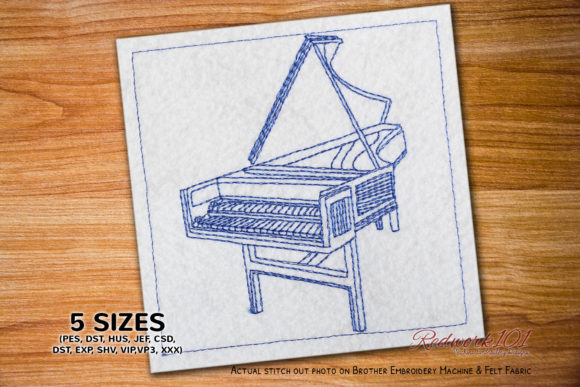
The Harpsichord Bluework design hits a sweet spot between sophisticated and approachable. The instrument itself is a stringed keyboard, and the bluework style gives it a classic, almost heirloom feel. It’s not overly cute or rustic; it leans toward elegant and decorative. For a craft fair product, that means it can appeal to shoppers looking for something refined—music teachers, classical music lovers, or anyone who appreciates vintage-inspired decor. The optional Box Stitch adds a framed look, but because the description notes that the outer box color differs from the main design unless it’s part of the design, I’d treat that as a customizable accent. That flexibility is a bonus for sellers who want to match their brand colors.
Where Harpsichord Bluework Shines on Products
I’ve tested this design on several product types, and here’s how it performs in a real booth setting:
- Tote bag design: The vertical orientation of a harpsichord works beautifully on a standard tote. Embroidered on the front panel, it becomes a statement piece. The bluework keeps it from feeling too busy, and the instrument’s shape is recognizable from across a booth.
- Apron embroidery: On a canvas apron, this design adds a touch of class. It’s perfect for a baker or barista apron—conversation-starting and elegant. The box stitch could frame it nicely on the chest pocket.
- Tea towel embroidery: This is where I’d start. A tea towel with Harpsichord Bluework in a muted blue thread on natural linen or cotton looks premium. It catches the eye of gift shoppers who want something unique.
- Embroidered patch: The design could be sized down for a sew-on patch. Patches sell well at craft fairs, especially for music-themed bundles. Make sure the details stay crisp at smaller sizes.
- Pillow covers and market bags: A decorative pillow with this motif would be a high-ticket item. The bluework style feels cohesive with farmhouse or classic decor trends.
For Etsy listings and printable mockups, this design photographs well because the blue thread stands out against light backgrounds. I recommend creating at least one real mockup on a tote or towel so customers can see the texture and scale.
Practical Selling and Production Points
From a production standpoint, Harpsichord Bluework is a solid choice for batch production. Because it’s a single-color palette (bluework), you don’t need to change thread colors constantly, which speeds up your workflow. The design is easy to understand at a glance—shoppers instantly recognize a harpsichord, even if they’re not musicians. That quick recognition is key to stopping foot traffic at a craft fair.
It works as both a small accent and a large focal design. For a cap or small pouch, you can reduce the size, but be careful with the instrument’s fine details. I’d recommend keeping the design at least 3–4 inches wide for clarity. For a tote or pillow, you can go larger, up to 6–7 inches, without losing the elegance.
When it comes to photography, the bluework contrasts nicely with white, cream, or light gray fabrics. For online listings, have a clear close-up shot that shows the stitch quality. Consider using a printable mockup of the design on a tote bag to show scale.
Careful-Use Notes for Embroidery Professionals
Every embroidery file has its tricks, and Harpsichord Bluework is no exception. Here are the points I flag before production:
- Dense stitch areas: The harpsichord’s strings and keyboard details may have high stitch density. Test on scrap fabric first. If the design feels too dense, consider using a lighter stabilizer or reducing density in your software if you have the ability to edit.
- Tiny details: Small lettering (if any) or thin lines can lose definition on textured towels or thick fabrics. I recommend avoiding this design on heavily textured tea towels unless you can enlarge the design to keep the details visible.
- Thick fabric and curved surfaces: On a cap or curved surface, the box stitch may distort. The description notes the box is optional, so you can omit it for caps or pouches. The main design is more forgiving.
- Dark fabric: Bluework on dark fabric can be problematic if the blue thread doesn’t contrast enough. Stick to light or medium fabrics, or use a bright blue thread. Test a sample before committing to a batch.
- Smaller sizes: If you shrink the design below 2.5 inches, the keyboard and strings may become a blur. Keep the size generous for best results.
Practical Embroidery Designer Notes Before You Sell
Before you start stitching products for your booth, run through these checks. I do them for every new embroidery file, and they save me from costly mistakes:
- Test on scrap fabric. Use the same fabric type you plan to sell—cotton, linen, canvas, or twill. Check the stitch quality and adjust tension if needed.
- Check thread contrast. The bluework should be clearly visible. If you’re using a pale blue on a white fabric, it might feel too washed out. A medium or navy blue can give more pop.
- Review spacing and density. Look for any areas where stitches are too close together. If the design has a high stitch count, use a tear-away or cut-away stabilizer to prevent puckering.
- Confirm hoop size. The description doesn’t specify exact hoop dimensions, but given the design’s aspects, I’d guess it fits a 4x4 or 5x7 hoop. Verify this in your software before starting production.
- Inspect the box stitch. If you plan to use the optional box, note that its color is separate from the main design. You may need to assign a different thread color. Test both versions.
- Create at least one real mockup. A stitched sample on a tote or towel is invaluable for booth display and photos. Customers trust what they see in person.
- Compare fabric colors. This design works best on light to medium fabrics. Dark backgrounds may require a different thread color or a white underlay.
- Confirm commercial licensing. Before selling finished products, make sure the embroidery file includes commercial use rights. Many digital embroidery files allow small-batch sales, but always check the terms.
Booth Display and Buyer Engagement
At a craft fair, Harpsichord Bluework will stand out if you display it thoughtfully. Place a stitched tea towel or tote at eye level. Use a small sign that says “Music Lover’s Gift” or “Hand-Embroidered Harpsichord.” The elegance of the design adds perceived value—customers will see it as a premium product, not a basic craft item.
Engage buyers by pointing out the bluework style and the optional box stitch. Explain that it’s a single-color embroidery that looks timeless. If you’re an Etsy seller, use the same language in your listing descriptions. Mention that it’s a machine embroidery design that you’ve carefully stitched onto quality blanks.
For batch production, this design is repeatable. Because you’re not changing thread colors, you can stitch multiple items in a row. I’d recommend pre-cutting stabilizer and hooping fabric ahead of time for maximum efficiency. Keep a few extra stitched samples on hand for custom orders.
Final Thoughts: Is Harpsichord Bluework Worth It?
As a designer who reviews embroidery files for a living, I give Harpsichord Bluework a solid recommendation for craft fair and handmade market products. It offers a unique music theme that isn’t overdone, and the bluework style gives it a cohesive, elegant look. The optional box stitch adds versatility, and the single-color palette keeps production simple. Just be mindful of the delicate details—test your fabric and stabilizer, and don’t shrink it too small. With careful preparation, this design will be a standout in your booth and a favorite among shoppers looking for something special.