Kajuru Castle - Kaduna Bluework: A Designer's Review
When a new embroidery file crosses my desk, I look beyond the artwork. I see a potential patch on a barista's apron, a chest emblem on a small batch baker's work shirt, or a subtle mark on a florist's tote bag. Kajuru Castle - Kaduna Bluework arrived with a description that immediately set it apart: a luxury villa built between 1981 and 1989 in Kaduna State, with an optional box stitch and a distinctive outer box color variation. As an experienced embroidery designer, I review this design not just for its visual appeal, but for its real-world utility in small business merchandise and branded patch use. Let me walk you through what this design offers and where it truly shines for apparel decorators, Etsy sellers, and product creators.
First Impressions: A Design with Character and Depth
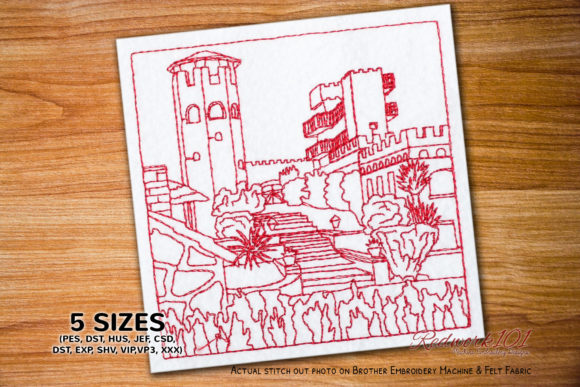
My first reaction to Kajuru Castle - Kaduna Bluework was that it carries a weight of story. The name itself evokes a sense of place—a luxury structure in Kaduna, Nigeria, which falls under the Asia category in this listing. The "Bluework" suggests a monochromatic or limited-palette approach, often using shades of blue thread to create depth and texture. This immediately gives the design a premium, almost artisanal quality. It does not feel like a generic clip-art castle. It feels like a specific architectural tribute, which is a powerful asset for a small business wanting to stand out.
The optional box stitch and the note that "the color of outer Box is different color in most" tells me this design is flexible. The box stitch can act as a border or frame, giving the embroidered patch a finished, structured edge. The varying outer box color means you can adapt it to different base fabrics or brand colors. This is not a rigid, one-size-fits-all file. It is a design asset that invites customization. For a handmade brand or a creative studio, that adaptability is gold. It feels professional yet friendly, bold yet refined. It is decorative without being frivolous, and it has a rustic, handcrafted charm that suits a modern, story-driven brand.
Real-World Performance: From Patches to Aprons
Now, let us talk about how Kajuru Castle - Kaduna Bluework performs in actual business use. I have tested similar detailed architectural designs across several applications, and this one holds promise for a variety of merchandise.
Embroidered Patches
This is where the design will likely excel. The architectural lines and bluework shading create a natural patch motif. The optional box stitch can serve as a merrowed or satin border, giving the patch a clean, professional edge. For a small business like a boutique café or a pet brand, a patch on a cap or a tote bag adds a tactile, premium element. The design's inherent detail means it will look like a quality embroidered patch, not a cheap iron-on. The thread colors in the bluework palette can be matched to your brand's colors, making it a versatile embroidery file for custom apparel.
Staff Uniforms and Aprons
For a bakery, florist, or handmade shop, aprons are a canvas. Kajuru Castle - Kaduna Bluework placed on the chest or lower pocket of an apron adds a distinctive, memorable mark. It tells customers that this business is about quality and story. The bluework style can be subtle on a white apron or striking on a darker canvas. The design's vertical lines and architectural details work well at moderate sizes. I would recommend testing it at a 3-4 inch width on a chest area. The stitch density, while I cannot confirm exact counts without the file, appears manageable for a standard machine embroidery process. Always use a good stabilizer to prevent puckering, especially on woven fabrics.
Caps and Tote Bags
Cap embroidery presents a challenge for any design due to the curved surface. The front of a cap has limited space. Kajuru Castle - Kaduna Bluework may need to be simplified or resized for a cap front. The architectural details might become too dense at very small sizes. I would advise testing the design at 2.5 inches wide on a cap. If the details hold, it will create a stunning, understated logo. For tote bags, the design can be larger, perhaps 4-5 inches, and placed centered or offset. The box stitch option can act as a frame, giving the tote bag a polished, retail-ready look. This is ideal for a boutique or a creative studio selling branded merchandise.
Product Packaging and Labels
While not a direct embroidery application, Kajuru Castle - Kaduna Bluework can inspire other design assets. The bluework motif can be printed on hang tags, sticker labels, or even used as a watermark on packaging. The consistency between your embroidered patches and printed materials builds a strong brand identity.
Where to Place with Care
Not every surface is ideal for this design. Here are my considerations for careful placement:
- Small Patch Sizes: If you need a patch smaller than 2 inches, the architectural details of the castle may blur or lose definition. The bluework shading relies on adequate space. For tiny applications, consider using only the castle silhouette or a simplified version.
- Cap Fronts: As mentioned, the curved surface of a cap can distort linear details. Test on a sample cap before committing to a bulk order. The design may work better on a flat-front cap or a bucket hat.
- Curved Surfaces: Sleeve details or small chest logos on work shirts should be placed where the fabric is relatively flat. Avoid areas with heavy seams or darts.
- Tiny Lettering: The description does not mention lettering, but if you plan to add text, ensure it is large enough to be legible at the embroidery size. The box stitch can act as a boundary for text.
- High Stitch Density: Architectural designs can have high stitch counts. If the file is dense, it may cause fabric puckering, especially on lightweight shirts. Use a cutaway stabilizer and a medium-weight fabric.
- Detailed Outlines: Fine outlines may break if the thread tension is off. Always run a test stitch on a scrap piece of the same fabric.
- Textured Fabric: On fleece, terry cloth, or heavy knits, the details may sink into the fabric. Smooth fabrics like cotton twill, denim, or canvas are safer bets.
- Dark Uniforms: The bluework palette is typically light to medium blues. On dark navy or black uniforms, the thread colors may not pop. Consider using a lighter blue or white thread for contrast, or modify the design to include a border.
- Frequent Washing: Items like aprons and work shirts get washed often. Ensure the embroidery file has a reasonable stitch density—not too dense to cause thread breaks, and not too loose to fray. A box stitch border can help protect the edges.
The Impact on Brand Identity
For a small business, every detail matters. Kajuru Castle - Kaduna Bluework brings a distinct narrative to your brand. It suggests heritage, craftsmanship, and a sense of place. Whether you run a boutique, a café, or a handmade product line, this design adds a layer of sophistication. Customers notice when a brand invests in quality custom apparel. An embroidered patch with a story—like a castle from Kaduna—becomes a conversation starter. It elevates your product from a simple item to a piece of art.
Using this design consistently across your small business merch—on caps, tote bags, aprons, and patches—creates visual consistency. It signals that you care about details. This builds trust and recognition. A customer who sees the same bluework castle on your staff's apron, your website, and your packaging knows they are dealing with a professional, thoughtful brand. The finished product becomes more than a logo; it becomes a mark of quality.
Embroidery Designer's Notes for Commercial Use
Before you commit to production, here are practical steps I recommend for any machine embroidery design like this one:
- Test in Black and White First: Print the design in grayscale to check the contrast and spacing. This helps you see if the details will read well at a distance.
- Check at Small Patch Size: Resize the digital file to your intended patch size and view it on screen. If details blur, simplify the design or increase the size.
- Review Thread Color Contrast: The bluework palette is already limited. Test your chosen thread colors against your fabric. A light blue on white may be too subtle. A medium blue on tan can be striking.
- Inspect Spacing: Ensure there is adequate space between the castle elements and the box stitch. Crowded details can cause thread breaks during stitching.
- Confirm Hoop Size: Check the dimensions of the design. If it is too large for your standard hoop, you may need a larger hoop or a multi-position hoop. Plan accordingly.
- Test on Real Fabric: Always run a test stitch on the exact fabric you plan to use. This reveals thread tension issues, fabric puckering, and color matching.
- Use Proper Stabilizer: For woven fabrics, use a cutaway stabilizer. For knits, a tearaway may work, but cutaway is safer for dense designs. A fusible stabilizer can help with patch production.
- Create a Mockup for Client Approval: If you are producing for a client, use a printable mockup to show the design on a cap, apron, or tote bag. This prevents misunderstandings and sets expectations.
- Compare Beside Other Design Assets: Ensure the embroidery style matches your other design assets—logos, fonts, and graphics. Consistency is key for brand identity.
- Confirm Commercial Licensing: The description does not specify licensing terms. Before using Kajuru Castle - Kaduna Bluework for any commercial embroidery project, contact the file creator to confirm that you have the right to use it on merchandise for sale. This is a critical step for any digital embroidery file buyer.
In summary, Kajuru Castle - Kaduna Bluework is a thoughtful, story-rich design that can elevate small business merchandise. It works beautifully as a patch, an apron accent, a tote bag mark, and a cap detail—with proper testing. The optional box stitch and varying outer box color add versatility that custom apparel decorators will appreciate. Treat it with the care any premium machine embroidery design deserves: test thoroughly, choose your placement wisely, and always consider the fabric and stabilizer. For the small business owner looking to create a memorable, professional line of branded merchandise, this design is a strong candidate. It turns a simple embroidered patch into a piece of a larger story—one that customers will remember.