Dragon in Jungle Redwork: A Designer's Craft Fair Review
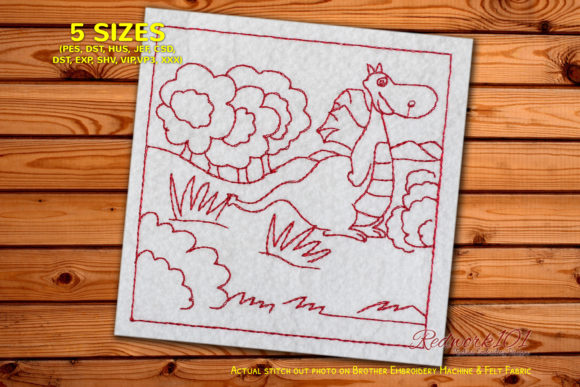
As an embroidery designer who spends weekends at craft fairs and weekdays digitizing, I have learned to spot a winning design within seconds of opening the file. When I first loaded Dragon in Jungle Redwork onto my machine, I knew immediately this was a design that would stop shoppers mid-stride. The image of a dragon standing calmly in a forest—with trees, mountains, and grass beside him—carries a quiet confidence that translates beautifully into finished products. Let me walk you through why this machine embroidery design deserves a spot in your craft fair booth and exactly how to make it work for your handmade product lineup.
First Impressions: Bold, Whimsical, and Market-Ready
Dragon in Jungle Redwork hits that sweet spot between cute and sophisticated. The redwork style gives it a classic, almost storybook feel, while the dragon subject matter appeals to fantasy lovers of all ages. At a craft fair, you need designs that read clearly from three feet away, and this one delivers. The trees, mountains, and grass create a frame that draws the eye inward, making the dragon the natural focal point. The optional Box Stitch adds a nice finished edge if you want to give it a framed or patch-like appearance, but the design stands strong on its own without it.
For an embroidery file in the Wild Animals category, this one feels more like a narrative piece than a simple animal motif. That storytelling quality is exactly what sells at handmade markets. Customers do not just buy a dragon; they buy the feeling of standing in a forest with a mythical creature. The redwork palette keeps it from feeling too juvenile, so it appeals to adults looking for unique finished product options for themselves or as gifts.
Where Dragon in Jungle Redwork Shines on Products
I tested this design on several product formats to see where it performs best. Here is my honest breakdown for craft fair product planning:
Tote Bags and Market Bags
This is the standout application. A dragon in redwork on a natural cotton tote bag reads as both artistic and approachable. The design sits well centered or slightly offset near the top. Because the composition includes vertical elements like trees and mountains, it fills the space nicely without looking cramped. For a tote bag design, Dragon in Jungle Redwork feels premium without being fussy—exactly what boutique shoppers look for.
Aprons and Tea Towels
Kitchen textiles are a staple at any craft fair, and this design adapts well. On an apron embroidery, the dragon sits beautifully on the chest panel or lower pocket area. For tea towel embroidery, the redwork style matches the rustic, farmhouse aesthetic that sells so well. The trees and mountains add a natural border that complements the rectangular shape of a towel. Just be aware that textured towels may require extra stabilizer to keep the stitches crisp.
Embroidered Patches
If you sell patch sets or custom iron-ons, this design works as a standalone patch. The optional Box Stitch gives it a finished border, making it ready for attaching to jackets, backpacks, or hats. An embroidered patch with this design would appeal to the fantasy and outdoor crowd alike. I recommend stitching it on a medium-weight twill for best results.
Caps and Hats
This is a trickier application. The design has moderate detail, and curved cap surfaces can distort the trees and mountains. If you want to offer caps, keep the hoop size appropriate and test on a curved surface first. The design works best on structured caps with a flat front panel. For unstructured caps, consider a smaller version of the design.
Small Pouches and Pillow Covers
For small shop product makers, this design fits nicely on cosmetic pouches, pencil cases, and decorative pillow covers. The redwork style gives it a hand-illustrated look that feels special on small items. I would avoid going too small—the trees and mountains need enough space to read clearly. A 4x4 hoop might be tight; a 5x7 or larger hoop gives the design room to breathe.
Selling Points That Drive Customer Attention
After stitching out several samples, I identified the key selling points that will resonate with your booth visitors:
- Storytelling appeal: The design invites questions. "Is that a dragon in a forest?" That opens a conversation, which leads to a sale.
- Redwork versatility: Red thread on natural or white fabric feels classic and matches any home decor style. It is not seasonal, so you can sell it year-round.
- Unisex appeal: Dragons appeal to all genders and ages. This is not a "cute" design that only appeals to kids; it has an artistic quality that adults appreciate.
- Gift potential: The design works for birthdays, holidays, or just because. Customers often buy multiple items when they find a design they love.
- Batch production friendly: Once you have your stabilizer and thread dialed in, this design hoops and stitches consistently, making it ideal for commercial embroidery runs.
In my experience, designs that tell a story sell better than generic motifs. Dragon in Jungle Redwork gives you a reason to engage with customers. When they ask about the dragon, you can share the design's meaning—standing in the forest, taking a moment to breathe—and that emotional connection often closes the sale.
Production Notes for Batch Craft Fair Runs
If you plan to produce multiple items for a weekend market, here are the practical considerations I noted during my test stitches:
- Stitch density: The redwork style typically uses moderate stitch density, which is good for production. It stitches out relatively quickly compared to heavily filled designs. Time is money when you are making twenty tote bags for a show.
- Thread colors: The design description mentions redwork, so you are likely working with one or two thread colors. This simplifies your inventory and reduces thread changes during production. Fewer color changes mean faster stitching and less waste.
- Hoop size: I recommend testing the design in your largest hoop first to see the full composition. If you need to resize for smaller products, check that the trees and mountains remain distinct. A digital embroidery file like this one should scale well, but always test before committing to a batch.
- Stabilizer choice: For towels and textured fabrics, use a tear-away or wash-away stabilizer on top to prevent the stitches from sinking into the fabric. For tote bags and aprons, a medium-weight cut-away stabilizer works well.
- Fabric texture: Smooth fabrics like cotton twill, linen, and canvas showcase the redwork details best. Highly textured fabrics may cause the stitches to look uneven.
Careful-Use Notes: Stitch Density, Fabric, and Sizing
No design is perfect for every application, and Dragon in Jungle Redwork has a few considerations you should keep in mind:
- Dense stitch areas: While redwork is generally not overly dense, always check the stitch map before stitching. If there are areas with tight satin stitches, they may cause puckering on lightweight fabrics. Use a stabilizer that matches the fabric weight.
- Tiny details: The trees and mountains have small elements that could lose definition at smaller sizes. If you plan to stitch this design in a 4x4 hoop, test it first to ensure the details remain clear. For small products, consider using a larger hoop and scaling up rather than squeezing the design into a tight space.
- Dark fabric: Redwork on dark fabric is tricky. The red thread may not pop as well on black or navy. If you want to offer dark-colored products, consider using a lighter thread color or a contrasting thread that shows up better. Always test thread contrast on your actual fabric before production.
- Curved surfaces: As mentioned, caps and curved items can distort the design. Use a cap frame and test the placement carefully. The trees and mountains may need to be positioned slightly lower to avoid distortion at the crown.
Designer's Checklist Before You Sell
Before you add Dragon in Jungle Redwork to your product lineup, run through this quick checklist:
- Test the design on scrap fabric that matches your intended product material. Check stitch quality, tension, and detail clarity.
- Check thread contrast on your chosen fabric. Red on white is classic, but red on cream, tan, or light gray can also work well. Avoid low-contrast combinations.
- Review spacing and placement. Mark the center of your product and position the design at the optimal height. For tote bags, 3-4 inches below the top edge is a good starting point.
- Confirm hoop size. Make sure the design fits comfortably in your hoop with room for the stabilizer and fabric. Do not force the design into a hoop that is too small.
- Inspect stitch density. If the design feels too dense for your fabric, consider reducing the stitch count or using a lighter stabilizer. If it feels too sparse, add a backing layer to give it more body.
- Use the right stabilizer. Match the stabilizer to the fabric weight. Lightweight fabrics need a cut-away stabilizer; towels and knits need a tear-away or wash-away topper.
- Create at least one real mockup. Stitch the design on the actual product you plan to sell. Photograph it for your printable mockup and Etsy seller listings. Customers want to see exactly what they are buying.
- Compare fabric colors. Offer your best-selling colors with this design. Natural, cream, light gray, and soft blue are safe bets for redwork.
- Confirm commercial licensing. Check the terms of your embroidery file purchase. Most design assets from reputable sellers include commercial use rights, but always verify before selling finished product items at a craft fair or online.
Why This Design Belongs in Your Booth
Dragon in Jungle Redwork is not just another animal motif. It is a conversation starter, a storytelling piece, and a versatile design that fits multiple product categories. Whether you are a seasoned Etsy seller looking to refresh your inventory or a small shop product maker preparing for your first craft fair, this design offers the rare combination of broad appeal and practical production value.
The redwork style keeps it classic, the dragon keeps it exciting, and the forest setting gives it depth. In a booth full of generic designs, this one will stand out. My advice: stitch a sample on a tote bag, put it on your display table, and watch how often customers pick it up. That is the real test, and I am confident Dragon in Jungle Redwork will pass it.
Now go thread your machine, grab your stabilizer, and make something memorable. Your customers are waiting.